When AI Becomes Part of the Culture
AI isn't just changing how work gets done. It's changing the culture around it.
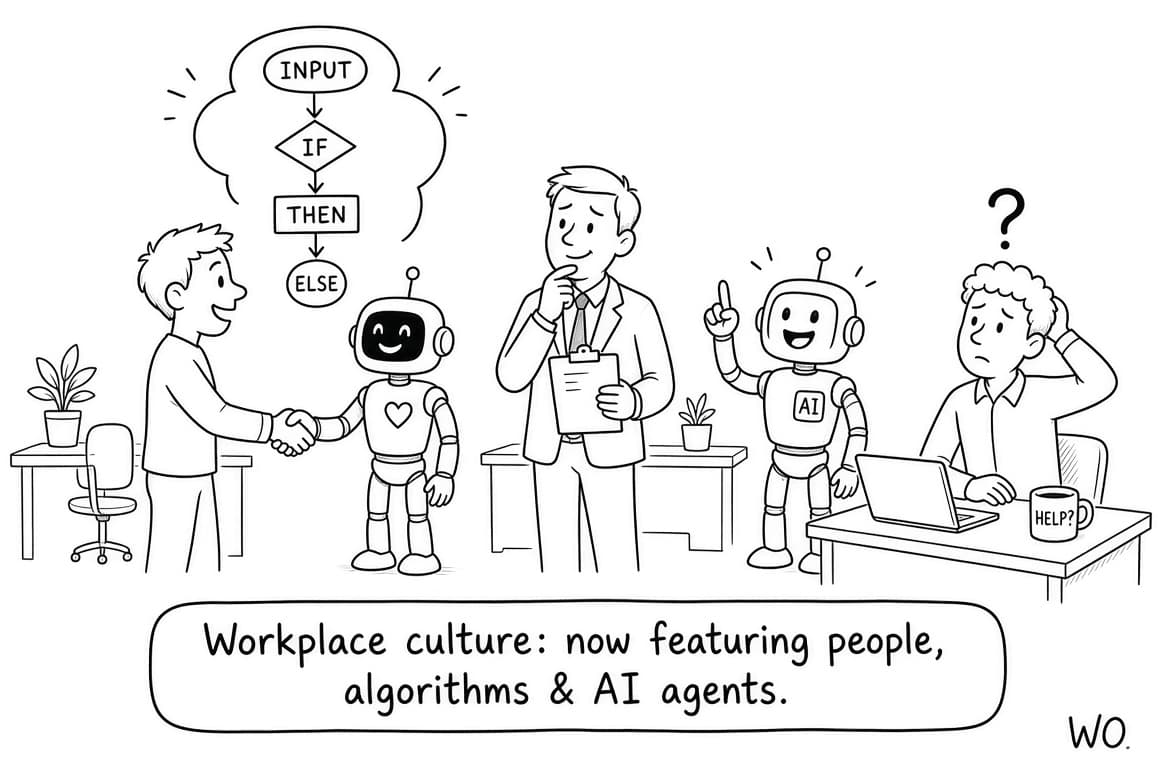
Culture eats strategy for breakfast swayed multitudes in the business world. That was the early 2000s.
Fast forward to 2026.
What happens to workplace culture when AI agents are drafting emails, summarizing meetings, screening resumes, or flagging support tickets?
AI tools aren't sitting outside the culture. They're becoming part of it, shaping, alongside workers and managers, which behaviors get reinforced and which quietly fade away.
A workplace's culture is no longer just people managing people. It's people, algorithms, AI agents and the interactions between them.
A recent survey of 102 CHROs participating in Gallup’s Global CHRO Roundtable found that 99% say AI is somewhat or very important to their organization's strategy. Gallup's latest data also suggests that AI is changing workplace culture in very different directions. The technology itself isn't determining the outcome. How organizations introduce and manage it matters.
What the Data Reveals
Gallup's Q1 2026 workforce study found employees at AI-adopting organizations were less likely than employees at non-adopting organizations to say their culture had stayed the same over the past year 51% versus 59%.
But changed cut both ways. Twenty-five percent said their culture had worsened, while 24% said it had improved. Nearly a coin flip.
Among employees who noticed a shift, nearly half attributed the change to advancements in technology including automation, robots or artificial intelligence to a significant degree. Gallup's conclusion: AI doesn't automatically make culture better. It acts as a catalyst for change, and employees experience that change differently depending on how AI is introduced and integrated into their work.
The Deciding Factor
Enter the manager. Gallup points to manager support as an important factor in how employees experience AI at work.
Employees who strongly agreed that their manager champions AI were dramatically more likely to say AI had transformed how work gets done. Thirty-three percent, compared with just 4% among those without that support.
Manager support was also associated with whether employees said workplace culture had improved at all 31% versus 21% and whether it had improved a lot. Nine percent versus Three percent. The same AI tool introduced to two different teams can produce very different experiences depending on how managers shape its use.
Why Defining It Matters
This is where the abstract question: What is culture in an AI-enabled organization? becomes practical.
If leadership can't articulate what a healthy AI-integrated culture looks like, managers have little to champion beyond the technology itself. And half the CHROs in Gallup's roundtable say they aren't confident their managers can guide employees on AI use. For decades, organizational culture has been understood as the shared values, norms and unwritten rules that shape how people actually behave at work, not simply what the employee handbook says.
Culture consultancy Walking the Talk describes it simply: culture is shaped by the behaviors that people and systems encourage, discourage and tolerate over time. AI is now part of those systems.
That raises different questions for leaders. Not simply how do we get people to use AI? But what behaviors are we creating when people and AI work together? And what is the organization's responsibility?
Without a working definition of what good looks like, AI adoption can drift and the culture that emerges may be more accidental than designed.
Sources: Gallup, “AI's Effect on Workplace Culture” (Aug. 2026); Walking the Talk, via Hunt Scanlon; SHRM, “Defining Organizational Culture”