BCG
"AI Day 2025 Spotlights AI's Transformative Role in Talent Acquisition and HR": HR Leaders Across Global Enterprises and AI Innovators Share Real-world Strategies at AI Day that are Revolutionizing Talent Acquisition, Workforce Development and Employee Retention at Scale PHILADELPHIA--( BUSINESS WIRE)-- Phenom, the a... | "AI to Reshape Over Half of US Jobs, Mandating New Workforce Strategy": AI Will Reshape More Jobs Than It Replaces | BCG # AI Will Reshape More Jobs Than It Replaces By , , , , , , , and ## Key Takeaways Task automation doesn’t equal job loss. Most roles will remain—but will change substantially. - ... | "AI's Rapid Job Transformation Outpaces Corporate Work Redesign": AI Is Reshaping Jobs Faster Than Companies Are Reshaping Work | Morningstar AI Is Reshaping Jobs Faster Than Companies Are Reshaping Work ## AI Is Reshaping Jobs Faster Than Companies Are Reshaping Work PR Newswire BOSTON, June 3, 2026 ...
- WireMon, Nov 16, 2026AI-Led Services to Generate $200 Billion in New Work by 2030, Reskilling Crucial
The big picture: A new Boston Consulting Group (BCG) report projects AI-led services will create up to $200 billion in net new work by 2030, significantly expanding the global services market. This growth hinges on technology companies reskilling their existing workforce rather than relying on external hires. Why it matters: Staffing and talent leaders must strategically invest in internal talent development to capitalize on emerging AI roles and avoid costly external recruitment premiums. Between the lines: - The global services market is expected to reach $2.2-$2.4 trillion by 2030. - AI-led services will contribute $300-$400 billion, with a net gain of $100-$200 billion after traditional service revenue losses. - Companies can save up to 35% by reskilling existing employees for Applied AI roles compared to external hiring. Staffing & HR impact: Recruiters must shift focus from external sourcing to internal mobility and upskilling programs to meet the demand for Applied AI professionals. This strategy can improve gross margins by reducing recruitment costs and increasing workforce efficiency. The bottom line: Proactive internal talent architecture is key to unlocking AI-driven growth and maintaining a competitive edge.
- Company UpdateTue, Nov 10, 2026HR Tech Partnerships Boost Recruitment Marketing, AI-Powered Hiring, and Workforce Intelligence
The big picture: Several HR technology firms, including HireClix, iCIMS, TalentNeuron, and Vetty, have announced new partnerships aimed at enhancing recruitment marketing, integrating AI into hiring processes, and providing deeper workforce intelligence. These collaborations leverage existing platforms to offer more comprehensive solutions to employers. Why it matters: These partnerships streamline talent acquisition, improve candidate experience, and provide critical data for strategic workforce planning, directly impacting staffing efficiency and HR decision-making. Between the lines: - HireClix joined the Workday Partner program to offer recruitment marketing services via Workday Marketplace. - iCIMS is integrating LinkedIn Recruiter System Connect Plus (RSC+) for Hiring Assistant, enhancing AI-powered applicant evaluation. - TalentNeuron and Boston Consulting Group (BCG) partnered to provide insights on AI's impact on workforce skills and cost management. Staffing & HR impact: These integrations reduce manual review, accelerate candidate shortlisting, and provide better data for workforce strategy, potentially improving recruiter mobility and optimizing staffing firm margins through increased efficiency. The bottom line: Expect continued consolidation and integration within the HR tech landscape as companies seek to offer more unified and AI-driven talent solutions.
- WireSat, Nov 7, 2026AI's Cognitive Toll: HR Leaders Grapple with Employee Burnout Amid Reskilling Demands
The big picture: AI integration is creating a "cognitive availability" crisis in the workforce, with employees struggling to absorb new skills and manage AI oversight, leading to mental fatigue and reduced productivity. HR and total rewards departments are at the epicenter of this disruption, often without adequate strategic involvement or unified skills data. Why it matters: This trend directly impacts talent development, employee well-being, and the effectiveness of AI adoption, posing significant challenges for staffing firms and HR leaders in maintaining a skilled and engaged workforce. Between the lines: - 37% of Canadian organizations exclude CHROs from AI strategy, per IBM. - A BCG study found 14% of AI users experience "AI brain fry" from oversight, increasing mental effort and errors. - PwC and Lightcast report significant advertised wage premiums for AI skills, yet many employers don't offer them to existing staff. Staffing & HR impact: Staffing firms must design training programs that account for employee cognitive load, focusing on modular, manager-supported learning. HR departments need integrated skills data and redesigned roles with appropriate compensation to address new AI-driven responsibilities. The bottom line: Successful AI integration hinges on recognizing and actively managing the human capacity for change and learning, not just technological deployment.
- Company UpdateMon, Nov 2, 2026BetterUp Seeks Principal Business Operations Manager, Emphasizes Hybrid Work and AI Integration
The big picture: BetterUp is hiring a Principal Business Operations Manager, offering a salary range of $194,000 - $270,000 USD, with a strong emphasis on a unique employee experience, hybrid work model, and AI-forward approach. The role involves leading strategic projects within the Office of the CEO. Why it matters: This job posting highlights evolving corporate strategies for attracting top talent, blending high compensation with robust benefits and a distinct culture, which can influence talent acquisition and retention benchmarks across industries. Between the lines: - The role requires 5-8 years of experience from top consulting firms (Bain & Company, McKinsey, BCG). - BetterUp operates a hybrid model, requiring employees to work from office hubs at least eight days per month. - The company actively seeks candidates who integrate AI into their work and are excited to evolve with technology. Staffing & HR impact: Staffing firms must adapt to client demands for hybrid models and AI proficiency, impacting recruiter training and candidate sourcing strategies. HR leaders should note the comprehensive benefits and development plans as competitive differentiators in a tight labor market. The bottom line: BetterUp's approach signals a future where high-value roles increasingly demand strategic consulting backgrounds, AI fluency, and adaptability to flexible yet structured work environments.
- Company UpdateTue, Oct 27, 2026TalentNeuron and BCG Partner to Reshape Workforces for the AI Era
The big picture: TalentNeuron and Boston Consulting Group (BCG) have formed a strategic partnership to help organizations redesign their workforces in response to AI, cost pressures, and evolving skill demands. Why it matters: This collaboration offers a data-driven approach for leaders to make informed decisions about workforce transformation, ensuring their talent strategies align with the rapid changes brought by artificial intelligence. Between the lines: - BCG research estimates 50-55% of US jobs will be reshaped by AI in 2-3 years, with 10-15% potentially eliminated in five years. - 72% of employees surveyed by BCG report AI has already significantly changed skill expectations in their roles. - The partnership combines BCG's transformation expertise with TalentNeuron's workforce intelligence platform, used by over 60% of the Fortune 100. Staffing & HR impact: This partnership will drive demand for strategic workforce planning and reskilling initiatives, potentially shifting recruiter focus towards talent development and internal mobility. Staffing firms may see increased requests for specialized AI-related skills and consulting services. The bottom line: Companies must proactively redesign work and operating models around people, leveraging data to navigate AI's profound impact on the labor market.
- Company UpdateSun, Oct 25, 2026Arsenal FC Cuts 60 Jobs, Highlighting Management Consultant Role in Redundancies
The big picture: Arsenal FC is cutting approximately 60 jobs, or 7% of its workforce, with management consultants from Boston Consulting Group (BCG) involved in the redundancy process. Why it matters: This situation underscores the controversial role of external consultants in corporate restructuring and job cuts, raising questions about their value proposition and impact on employee morale and operational efficiency. Between the lines: - Boston Consulting Group was engaged to identify areas for cost-cutting and efficiency improvements at Arsenal. - The author criticizes management consultants for often recommending job reductions without deep operational understanding. - The article draws parallels to past media industry redundancies influenced by similar consulting practices. Staffing & HR impact: The use of external consultants for workforce reductions can impact internal HR teams, potentially leading to lower morale and questions about the company's commitment to its existing talent. Staffing firms may see increased demand for outplacement services or temporary staffing as companies restructure. The bottom line: The debate over the true value and ethical implications of management consultants in workforce reduction strategies continues.
- Company UpdateSun, Oct 25, 2026Baltic Classifieds Group Navigates Market Shifts with AI Investment and Executive Appointments
The big picture: Baltic Classifieds Group (BCG), an online classifieds operator in the Baltics, is experiencing market fluctuations but remains focused on future growth through strategic investments and executive leadership changes. Why it matters: BCG's performance and strategic direction, particularly its emphasis on AI and data, offer insights into how digital platforms are adapting to market demands and optimizing operations, which can influence talent acquisition and technology adoption across the staffing industry. Between the lines: - BCG's stock has seen a 29.2% decline over the past year, despite recent positive short-term movements. - The company is investing in data and AI to shape listing volumes and margins. - Sean Glithero has been appointed as an Independent Non-Executive Director, bringing significant finance and board-level experience. Staffing & HR impact: The focus on AI and data investment suggests a growing need for specialized tech talent within classifieds platforms, potentially impacting talent acquisition strategies for similar digital businesses. Executive appointments like Glithero's highlight the ongoing demand for experienced leadership in navigating market dynamics. The bottom line: BCG's strategic pivot towards AI and data, coupled with new leadership, signals a proactive approach to long-term value creation in a dynamic market.
- Company UpdateWed, Oct 21, 2026BCG Seeks Talent Specialists to Optimize Consulting Staffing Pipeline
The big picture: Boston Consulting Group (BCG) is actively recruiting Talent Specialists to manage its consulting staff pipeline, focusing on end-to-end staffing, project team optimization, and resource deployment. Why it matters: This role highlights the critical internal function of strategic talent management within large consulting firms to ensure optimal utilization and development of their primary asset: people. Between the lines: - The role supports weekly staffing cadences, including case intake, shortlist distribution, and final staffing decisions. - Talent Specialists will manage the SAM pipeline and build awareness of active and potential casework within assigned Practice Areas. - The position involves collaborating with various internal functions like Career Development, Talent Acquisition, and Finance. Staffing & HR impact: This internal staffing role underscores the complexity of talent deployment in professional services, directly influencing gross margin through efficient utilization and recruiter mobility within the firm. It also emphasizes the strategic importance of internal talent management for large organizations. The bottom line: BCG's investment in dedicated talent pipeline specialists reflects a growing trend in large firms to professionalize and optimize internal workforce allocation for competitive advantage.
- WireWed, Oct 21, 2026AI Agents Set to Integrate as Coworkers, Challenging Traditional HR Models
The big picture: Autonomous AI agents, designed to complete tasks and interact like human colleagues, are rapidly entering the workforce, prompting companies to rethink workplace dynamics and HR frameworks. Why it matters: This shift demands new strategies for integrating AI into teams, managing performance, and addressing the unique challenges of human-AI collaboration for staffing and talent leaders. Between the lines: - A January poll found 22% of organizations already added AI agents to org charts, a number expected to grow. - Companies are personifying AI agents with names and avatars to encourage human-like interaction. - Research shows managers caught 18% fewer errors when work was attributed to an AI employee versus an AI tool. Staffing & HR impact: HR departments must develop new guardrails for AI agent integration, including performance management, ethical guidelines, and training for human employees on effective collaboration. This will impact recruiter roles and potentially redefine job descriptions. The bottom line: The rise of AI coworkers necessitates a proactive re-evaluation of HR policies and workplace culture to ensure harmonious and productive human-AI teams.
- Company UpdateWed, Oct 14, 2026PowerToFly Pivots to AI Workforce, Emphasizing Human Expertise in AI Development
The big picture: PowerToFly, a platform connecting professionals with companies, is relaunching as an AI workforce company, focusing on the critical human element in successful AI implementation. Why it matters: This shift highlights the growing demand for specialized human talent in AI development and the challenges companies face in finding the right expertise, impacting talent acquisition strategies. Between the lines: - Most AI initiatives fail due to people and process issues, not technology. - PowerToFly's community includes 380K+ domain experts and 65K+ AI specialists. - Over 75% of their talent pool comprises women or BIPOC professionals. Staffing & HR impact: Staffing firms and HR leaders must recognize the specialized skills needed for AI, moving beyond traditional tech recruitment to source diverse domain and functional experts. This creates new opportunities for talent mobility and specialized placement. The bottom line: The future of AI success hinges on human intelligence and diverse perspectives, not just algorithms.
- WireFri, Jun 5, 2026AI's Rapid Job Transformation Outpaces Corporate Work Redesign
The big picture: Artificial intelligence is reshaping job roles at a pace far exceeding companies' efforts to redesign work processes and structures, according to a recent BCG survey. This creates a significant gap between technological advancement and organizational adaptation. Why it matters: This disparity impacts workforce productivity, talent retention, and the strategic integration of AI. Leaders must proactively address work redesign to fully harness AI's benefits and prevent employee friction. Between the lines: - Nearly half of respondents now spend more time managing and directing AI than performing the work itself. - Two-thirds of regular AI users report higher job satisfaction. - 41% of users also report an increase in cognitive load. Staffing & HR impact: Staffing firms must identify candidates proficient in AI management and collaboration, while HR departments need to develop robust training for evolving roles. Managing increased cognitive load is crucial to prevent burnout and maintain talent. The bottom line: Proactive work redesign is essential for companies to maximize AI's potential and ensure a sustainable, satisfied workforce.
- WireMon, Apr 13, 2026AI to Reshape Over Half of US Jobs, Mandating New Workforce Strategy
The big picture: A new BCG study projects that 50% to 55% of US jobs will be substantially reshaped by AI within the next two to three years, emphasizing task automation over outright job replacement. Why it matters: This shift demands that workforce strategy be integrated directly into core business strategy, rather than being a downstream consideration, for all corporate and staffing leaders. Between the lines: - Our microeconomic model reveals 50-55% of US jobs will be reshaped by AI in 2-3 years. - Task automation will lead to substantial changes in roles, not widespread job loss. - Workforce strategy must be embedded in overall business strategy, not an afterthought. Staffing & HR impact: Recruiters must pivot to skills-based talent acquisition and proactive talent development. HR leaders need to integrate AI's impact into strategic planning, focusing on upskilling and reskilling initiatives to maintain a competitive workforce. The bottom line: Proactive adaptation and strategic integration of AI into workforce planning are essential for future talent success.
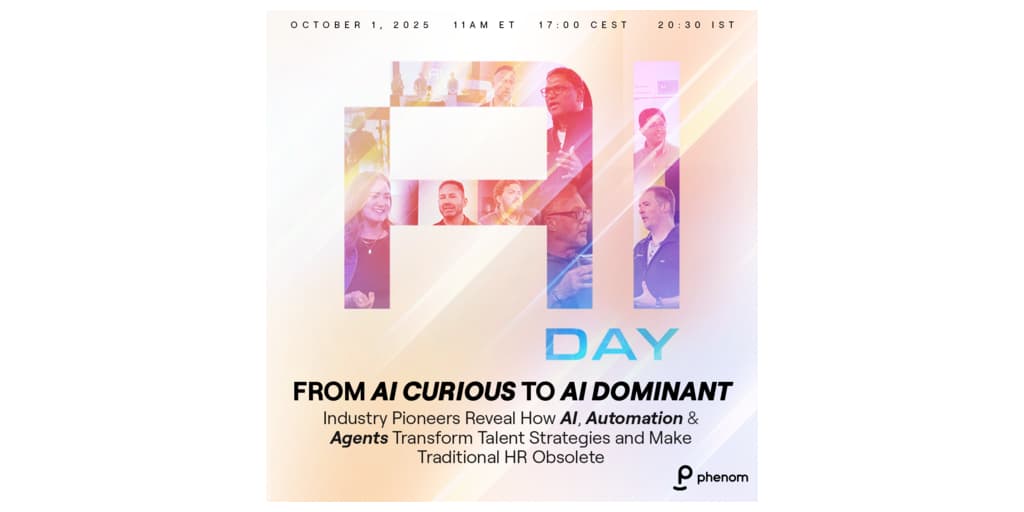
- WireWed, Sep 17, 2025AI Day 2025 Spotlights AI's Transformative Role in Talent Acquisition and HR
The big picture: Phenom's AI Day 2025 will showcase real-world AI strategies revolutionizing talent acquisition, development, and retention for HR and IT professionals. Industry leaders will share proven frameworks for deploying AI agents and automation at scale. Why it matters: This event offers critical insights for staffing firms and HR executives seeking to leverage AI for competitive advantage, enhance agility, and optimize workforce dynamics. It addresses how AI can drive efficiency and strategic growth. Between the lines: - Hosted by Phenom, an applied AI company. - Features speakers from IAG, Merck KGaA, BCG, and Excellus BlueCross BlueShield. - Focuses on ethical strategies, live demos, and technical deep dives into AI architecture. Staffing & HR impact: AI adoption can significantly boost recruiter productivity and improve talent matching, potentially impacting gross margins through increased efficiency. Compliance considerations for AI-driven hiring processes will also be key. The bottom line: AI is no longer theoretical; it's a strategic imperative for modern HR and talent leaders.