Second Talent
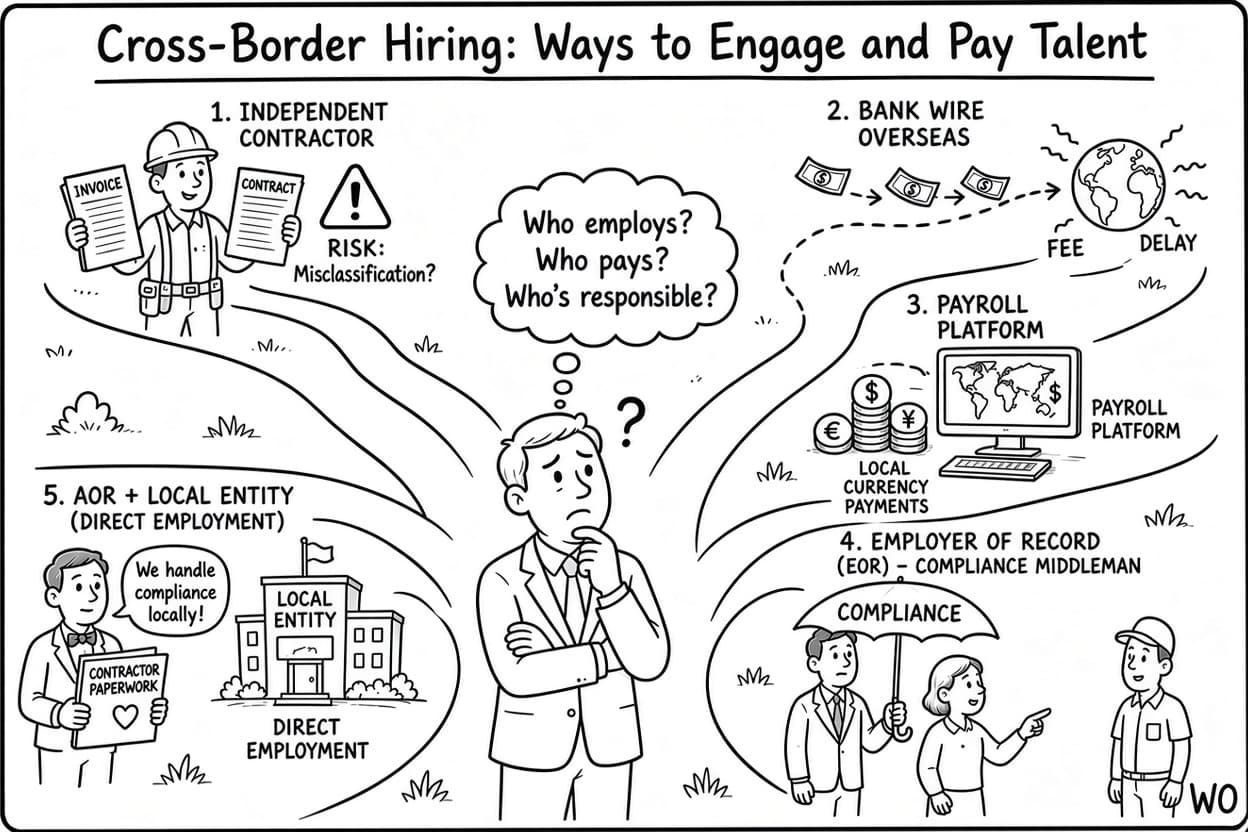
- Original ReportingThu, Nov 5, 2026Cross-Border Hiring: Ways to Engage and Pay Talent
From contractor invoices to an Employer of Record, each model solves a different problem and comes with different trade-offs.
- Company UpdateFri, Oct 16, 2026How US Polling App Anketa Saved $200K on 2 Engineering Hires - Case Study
The big picture: 3. Solutions Delivered by Second Talent ... Weeks after launching its app on web, iOS and Android, it needed two senior builders: a full-stack web engineer and a backend engineer for its ASP.NET Core platform. Second Tal Why it matters: This development impacts executive workforce planning, talent acquisition velocity, and staffing compliance. Between the lines: - Operating conditions and hiring signals continue to adjust across key sectors. - Staffing leaders are evaluating market dynamics and regulatory posture. Staffing & HR impact: Talent leaders should assess contractor pipeline margins and direct hiring exposure in light of these changes. The bottom line: Real-time visibility into labor market indicators remains critical.
- Company UpdateThu, Oct 8, 2026AI Talent Hotbeds: Bay Area Leads, NYC Surges in Job Postings
The big picture: The San Francisco Bay Area remains the top U.S. hub for AI talent and frontier lab hiring, while New York City has surpassed it in total AI job postings and is rapidly expanding its AI workforce. Why it matters: Staffing firms and talent acquisition leaders must understand these geographic concentrations to effectively source specialized AI talent and navigate evolving regional compliance landscapes. Between the lines: - The Bay Area boasts 98,699 AI-skilled tech workers and 57% of its tech job postings are AI-related. - New York City leads with 93,028 AI job postings and is seeing significant expansion from AI labs like Anthropic. - Key regulatory differences exist, with California's frontier model law and NYC's Local Law 144 impacting AI hiring tools. Staffing & HR impact: Recruiters should focus on these key metros for AI talent pipelines, while HR teams must be aware of local AI hiring tool regulations to ensure compliance and avoid penalties. Margin pressures may increase due to high talent demand and cost of living in top-tier cities. The bottom line: While the Bay Area remains the AI innovation core, New York City is rapidly emerging as a critical market for applied AI talent and job volume.
- Company UpdateWed, Oct 7, 2026Second Talent Unveils Brand Guide for AI-Native Tech Talent Platform
The big picture: Second Talent, a tech talent platform connecting companies with AI-native engineers, has released its comprehensive brand guide detailing its visual identity and design principles. Why it matters: This guide solidifies Second Talent's brand presence in the competitive tech staffing market, emphasizing a distinct, minimalist aesthetic that reflects its focus on efficiency and specialized AI talent. Between the lines: - The brand uses a limited palette of three colors: Brand Orange, Ink, and White. - Design principles emphasize square components, zero elevation, and hairline structures. - Strict guidelines are provided for logo usage, clear space, and minimum sizing. Staffing & HR impact: A strong, consistent brand identity can enhance Second Talent's market recognition, attracting both AI talent and client companies, potentially impacting recruiter efficiency and client acquisition in a niche market. The bottom line: Second Talent is strategically investing in its brand to stand out in the rapidly growing AI talent acquisition space.
- WireTue, Oct 6, 2026EOR Pricing Wars: Provider Costs Range from $199 to $699 Monthly Per Employee
The big picture: Employer of Record (EOR) service fees vary significantly, with most providers listing prices between $399 and $699 per employee per month in 2026, excluding salary and statutory contributions. Why it matters: This wide range in EOR costs directly impacts global expansion strategies and talent acquisition budgets for companies leveraging remote workforces. Between the lines: - Flat fees are the predominant EOR pricing model, with no percentage-based plans observed among top providers. - The cheapest list price doesn't always mean the lowest overall cost, as deposits and hidden fees can add up. - An employer's own entity can become more cost-effective than EOR for teams of 10 or more staff in a country within a year. Staffing & HR impact: Staffing firms and HR leaders must carefully evaluate EOR provider pricing structures, including hidden costs and deposits, to optimize gross margins and ensure compliance for international hires. The cost disparity can significantly affect the financial viability of global talent strategies. The bottom line: Scrutinize EOR contracts beyond the headline price to uncover true costs and avoid budget surprises.
- WireMon, Oct 5, 2026APAC AI Hiring Demand Soars 52%, Intensifying Talent Scarcity
The big picture: Second Talent's August 2026 Asia Tech Salary Index reports a significant 52% year-over-year increase in demand for AI roles across the APAC region. This surge underscores a rapidly expanding need for specialized artificial intelligence talent. Why it matters: Workforce and staffing leaders face heightened competition for a limited pool of AI professionals, necessitating agile recruitment strategies and competitive compensation adjustments. This trend signals a critical shift in regional labor market priorities and required skill sets. Between the lines: - The August 2026 index update provides regional hiring benchmarks. - Co-founder & CEO Elton Chan highlights the specific skills needed to move AI into production. - The demand increase is recorded year-over-year. Staffing & HR impact: Recruiters must rapidly adapt to source highly specialized AI talent, potentially increasing gross margins for firms with deep expertise in this niche. Companies will need to prioritize talent development and offer attractive compensation packages to secure and retain these critical skills. The bottom line: The escalating demand for AI talent in APAC makes strategic talent acquisition and upskilling an immediate imperative.
- WireTue, Sep 29, 2026Daily Brief Sep 28, 2026: AI Integration and Workforce Transformation Shape the Staffing Landscape
AI is rapidly reshaping the staffing and HR landscape, with Adecco deploying AI globally and California enacting first-in-the-nation AI safeguards. The labor market is seeing a skills rebalance and slower hiring, rather than widespread AI-driven layoffs.
- WireMon, Sep 28, 2026AI Slows Hiring, Not Mass Layoffs, Despite Job Cut Mentions
The big picture: AI is impacting the 2026 job market primarily by slowing hiring, rather than causing widespread layoffs, even as it's cited in a significant portion of announced job cuts. Yale's Budget Lab indicates no clear sign of broad AI disruption across the labor market. Why it matters: Workforce leaders must understand AI's nuanced influence on talent acquisition and retention strategies, as its effects are more subtle than often perceived. This shift demands strategic adjustments in hiring forecasts and talent development. Between the lines: - AI was named in 116,175 announced job cuts (22% of total) from January to August. - Yale's Budget Lab finds no clear sign of AI disruption across the broader labor market. - The primary impact is through reduced hiring velocity, not direct job elimination. Staffing & HR impact: Staffing firms may experience slower requisition fulfillment and increased competition for specialized roles due to reduced hiring. HR departments must adapt talent acquisition strategies to account for AI-driven hiring slowdowns rather than preparing for mass displacement. The bottom line: AI's job market evolution is a marathon of strategic adjustments, not a sprint of immediate upheaval.
- WireTue, Sep 8, 2026AI Talent Shortage Deepens: Companies Scramble for 'AI-Native' Workers Amid Manager Deficit
The big picture: Nearly half of companies are actively seeking "AI-native" talent, yet fewer than 1 in 6 workers identify as such, creating a significant skills gap. This crisis is exacerbated by a shortage of managers capable of effectively leading AI-fluent teams. Why it matters: This talent deficit threatens corporate productivity and innovation, forcing staffing and talent acquisition leaders to rethink recruitment and development strategies for critical AI roles. Between the lines: - 45% of companies are hunting for AI-fluent workers. - Under 1 in 6 workers consider themselves AI natives. - The challenge extends beyond hiring, impacting post-hire integration and productivity. Staffing & HR impact: Recruiters face intense competition for scarce AI talent, driving up acquisition costs and impacting gross margins. HR must prioritize robust talent development programs to upskill existing workforces and cultivate AI-capable leadership. The bottom line: The race for AI talent is intensifying, demanding innovative solutions beyond traditional hiring practices.