Pebl
AI-powered Employer of Record for hiring anywhere
Pebl (formerly Velocity Global) is a global employment platform that helps companies hire, pay and support employees in 185+ countries without setting up local entities. Its services include Employer of Record, global payroll, benefits, immigration and talent sourcing.
- Company UpdateSat, Nov 21, 2026Pebl Earns Fifth Straight Everest Group Leader Ranking in Global Employer of Record
The big picture: Pebl, an AI-first global employment platform, has been named an Everest Group Leader for the fifth consecutive year in the 2026 Employer of Record (EoR) Solutions PEAK Matrix Assessment. The recognition places Pebl among the top-tier providers for companies hiring and managing workers across borders. Why it matters: For staffing leaders and HR executives, EoR capability is becoming a core operating layer for global expansion, not a back-office utility. A repeat Leader ranking signals that Pebl is consolidating compliance, payroll, and workforce-cost visibility into a single workflow. Between the lines: - Pebl was assessed against 29 global providers and earned Leader recognition in the 2026 PEAK Matrix. - Everest Group cited strengths in generating local contracts, approving time off, paying employees, and understanding workforce costs. - The assessment highlights Alfie's ability to combine employment guidance with action, alongside integrations, local compliance infrastructure, and specialist support. Staffing & HR impact: The result supports faster, more compliant international hiring for employers expanding into new jurisdictions, reducing reliance on fragmented local vendors. It also raises the bar for EoR margins and service quality, as buyers increasingly compare platforms on compliance depth, integrations, and specialist support rather than headline coverage. The bottom line: Pebl's repeat Leader status makes AI-assisted EoR a strategic differentiator for global workforce strategy; watch whether the platform converts recognition into broader enterprise adoption and tighter compliance economics.
- Original ReportingFri, Nov 20, 2026Can You Explain Your Pay Decisions? Why a Pay Philosophy Matters Now
Publishing a salary range is the easy part. Explaining why someone is paid what they are and defending that decision is where things get complicated.
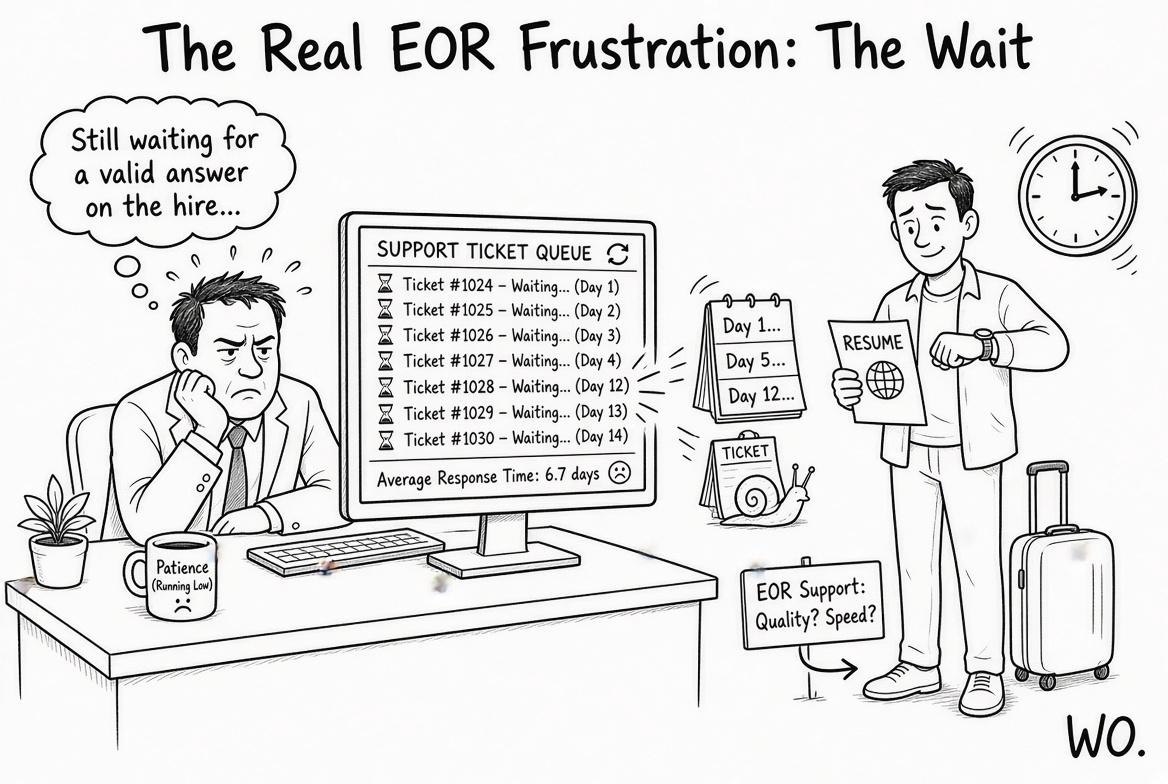
- Original ReportingThu, Nov 12, 2026For EOR Customers, the Real Test Is Getting Fast, Reliable Answers
Choosing an employer of record is about more than the ability to hire across borders. For companies, the real test comes when they need an answer: Is the information accurate, and how quickly can a provider resolve an issue?
- Company UpdateTue, Nov 10, 2026EOR Platforms Expand Global Reach with Expense Cards, AI, and Strategic Acquisitions
The big picture: Employer of Record (EOR) platforms like Remote, Deel, and G-P are rapidly expanding their services globally, introducing new features such as expense cards for remote staff, AI-powered hiring workflows, and strategic acquisitions to enhance cross-border payroll and compliance. Why it matters: This surge in EOR innovation and market consolidation directly addresses the growing demand for simplified international hiring and workforce management, impacting how companies access global talent and navigate complex labor laws. Between the lines: - Remote launched expense cards for EOR staff and rebranded as a financial operating system, reporting 300% payroll growth. - Deel expanded into field services for African site workers, offering tighter pay and compliance control in hazardous sectors. - G-P introduced an AI platform to streamline global hiring workflows and reduce compliance risks across 180+ countries. Staffing & HR impact: These advancements will significantly ease administrative burdens for HR teams and recruiters managing international workforces, potentially improving gross margins by reducing compliance risks and streamlining operational processes. The focus on integrated platforms could also enhance recruiter mobility by centralizing global talent pools. The bottom line: The EOR market is rapidly maturing, offering increasingly sophisticated tools that will redefine global talent acquisition and compliance for multinational organizations.
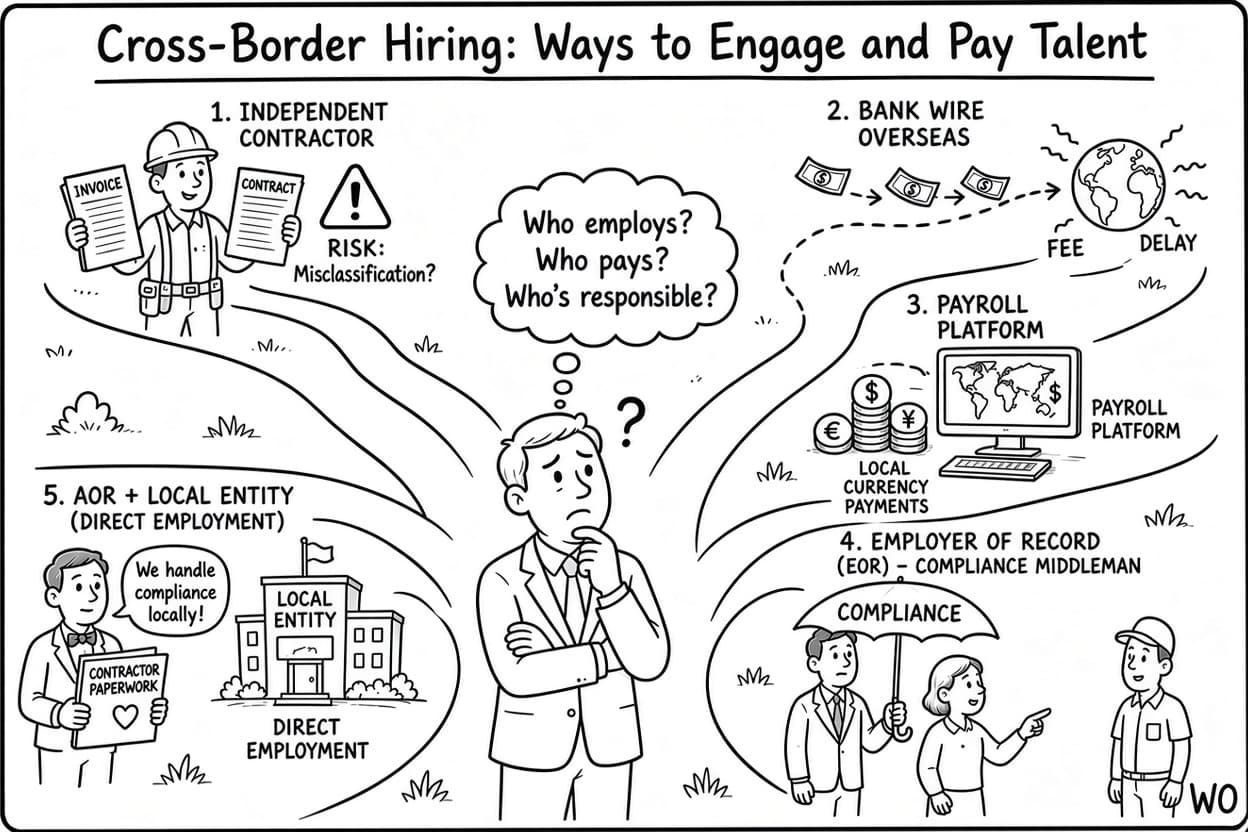
- Original ReportingThu, Nov 5, 2026Cross-Border Hiring: Ways to Engage and Pay Talent
From contractor invoices to an Employer of Record, each model solves a different problem and comes with different trade-offs.
- Original ReportingMon, Oct 26, 2026Beyond the Demo: Six Questions to Ask Before Hiring and Paying Across Borders
Choosing a global hiring and payroll provider takes more than a polished demo. From legal responsibilities and local compliance to hidden costs and employee support, here are six questions to ask before you commit.
- WireTue, Oct 6, 2026EOR Pricing Wars: Provider Costs Range from $199 to $699 Monthly Per Employee
The big picture: Employer of Record (EOR) service fees vary significantly, with most providers listing prices between $399 and $699 per employee per month in 2026, excluding salary and statutory contributions. Why it matters: This wide range in EOR costs directly impacts global expansion strategies and talent acquisition budgets for companies leveraging remote workforces. Between the lines: - Flat fees are the predominant EOR pricing model, with no percentage-based plans observed among top providers. - The cheapest list price doesn't always mean the lowest overall cost, as deposits and hidden fees can add up. - An employer's own entity can become more cost-effective than EOR for teams of 10 or more staff in a country within a year. Staffing & HR impact: Staffing firms and HR leaders must carefully evaluate EOR provider pricing structures, including hidden costs and deposits, to optimize gross margins and ensure compliance for international hires. The cost disparity can significantly affect the financial viability of global talent strategies. The bottom line: Scrutinize EOR contracts beyond the headline price to uncover true costs and avoid budget surprises.
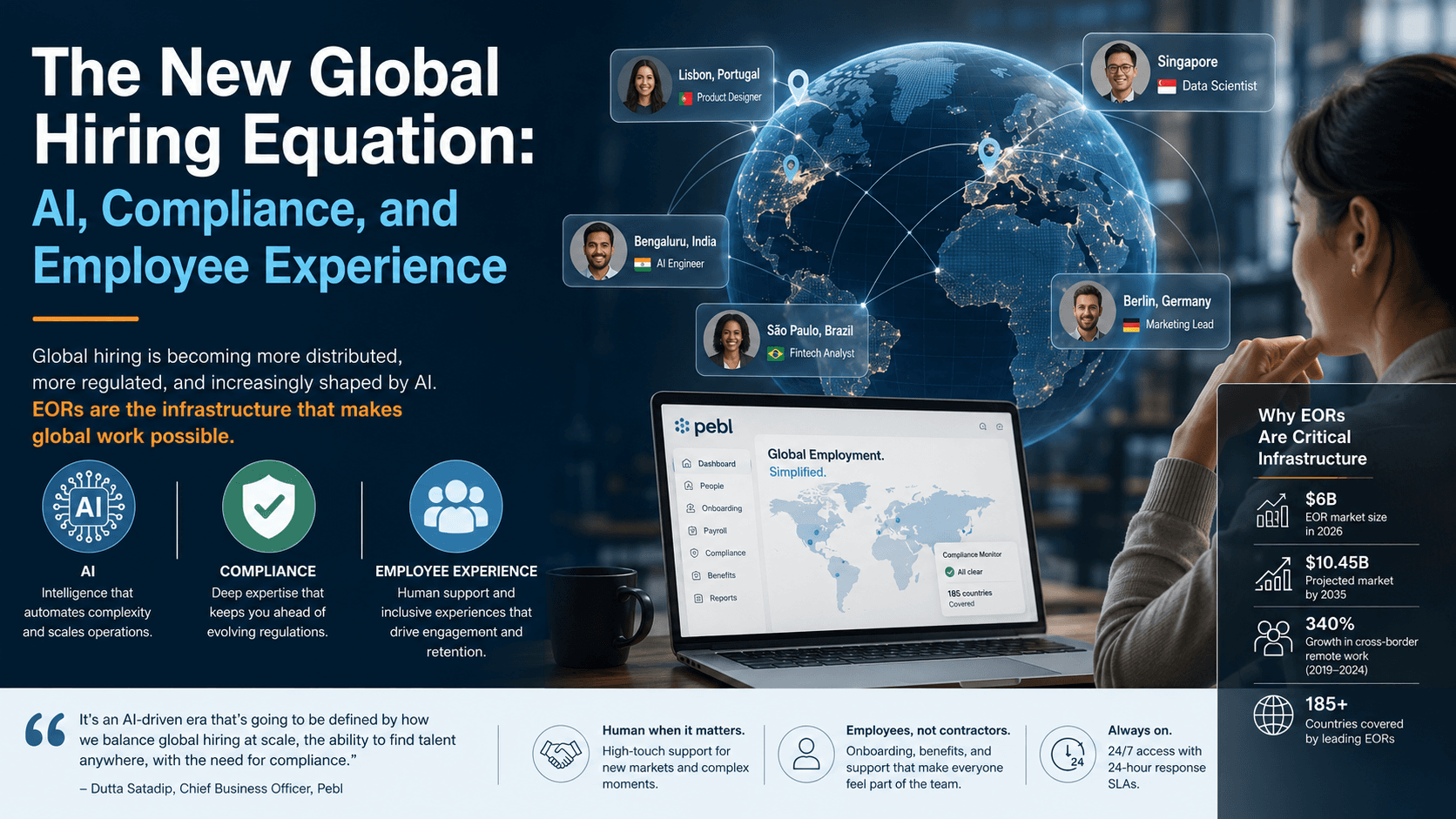
- Original ReportingMon, Jun 15, 2026The New Global Hiring Equation: AI, Compliance, and Employee Experience
Global hiring is entering a new era defined by the intersection of AI, compliance, and employee experience. As companies expand across borders to access global talent, they face growing regulatory complexity and rising expectations from employees. Employer of Record (EOR) providers are evolving from simple payroll solutions into critical infrastructure, helping organizations navigate compliance, scale international hiring, and create seamless employee experiences. The future of global workforce expansion will belong to providers that combine technology with deep operational expertise and human support.